Custom Medical CRM Development
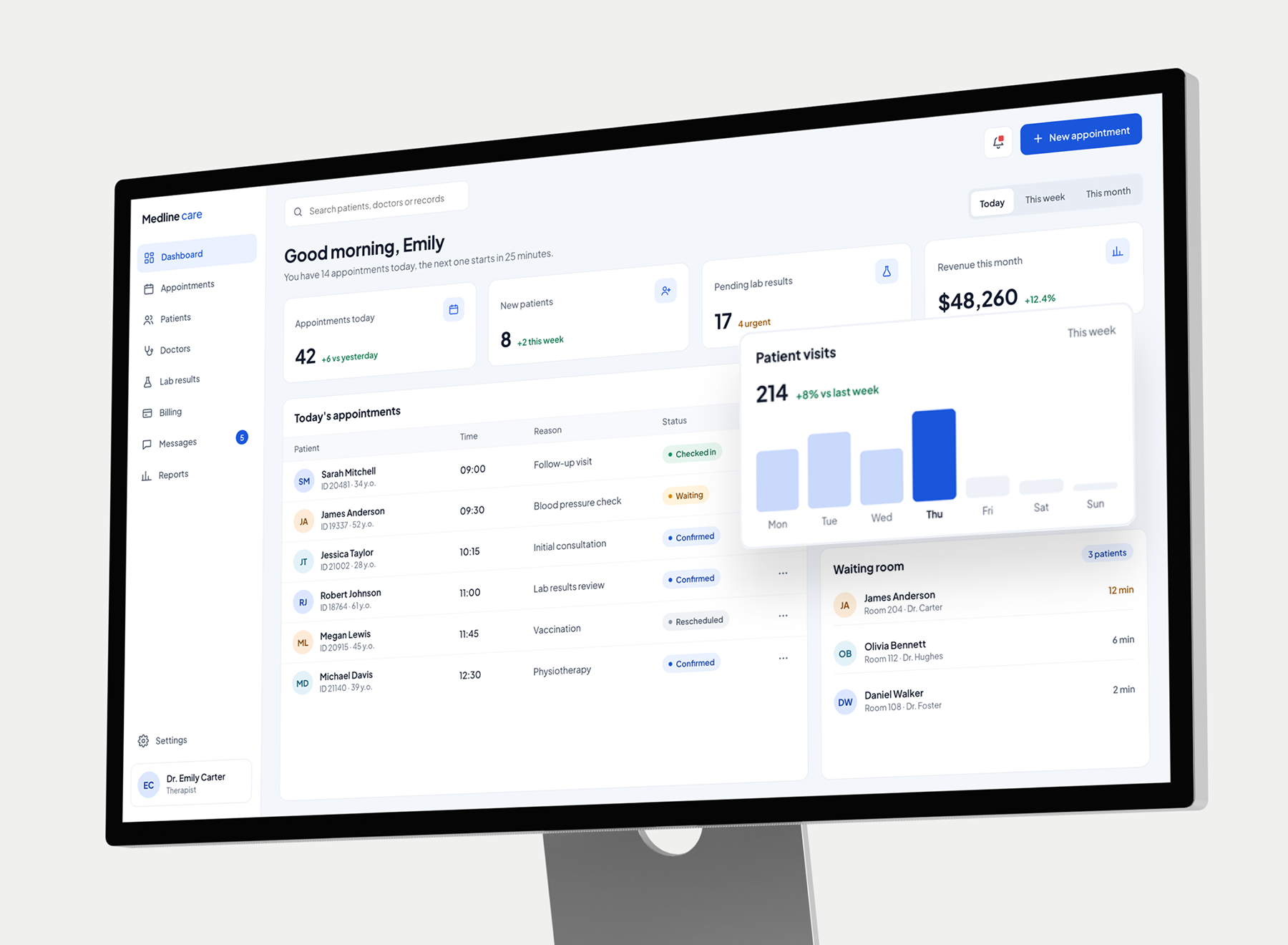
Healthcare customer relationship management software is a type of a system that helps providers manage patient relationships and care delivery. With 20+ years in the healthcare industry, IT Craft designs and develops custom (CRM) systems for your clinic, hospital, or private practice.
 Overall review rating
Services and Solutions
A software development company with 20+ years of experience, IT Craft provides full-scale healthcare CRM development services, consulting and EHR integration to RPM solutions and analytics. Our services include:
Custom Medical CRM Development
We build CRM solutions that fit your organization's unique workflow and help staff manage patient communication, streamline operations, and make data-driven decisions, all in full compliance with HIPAA, GDPR, and other relevant standards.
Integration with EHR
Well-versed in HL7 and FHIR, we connect your CRM to existing electronic health records (EHRs) and electronic medical records (EMRs) software, so medical staff can access complete patient records and eliminate duplicate data entry.
Microsoft Dynamics CRM Customization
IT Craft is ready to customize and extend Microsoft Dynamics 365 with new modules and dashboards that automate administrative tasks and support your care delivery and financial goals.
Healthcare CRM Consulting
Our healthcare IT consultants define CRM requirements, architecture, integrations, compliance needs, and implementation strategy, helping you get a realistic timeline and cost estimate before development starts.
Enterprise Healthcare Applications
IT Craft delivers enterprise-grade healthcare systems that centralize patient data, connect departments, and support large-scale clinical and administrative operations.
Healthcare Solutions Enhancement
We upgrade existing healthcare software, adding new functionality, integrations, automation, and better performance.
Dedicated Quality Assurance
Our QA specialists run functional, integration, performance, security, usability, and compliance testing of healthcare software. This reduces the risk of PHI leaks and failed audits after launch.
Remote Patient Monitoring
We deliver RPM solutions that connect patients, clinicians, medical devices through dashboards, alerts, and real-time health data.
Practice Management Software
We develop practice management software for daily front-desk work, helping clinics streamline scheduling, patient intake, billing, and staff coordination.
mHealth App Development
Our mobile developers create mobile healthcare apps for remote care, health tracking, and secure messaging with clinicians.
Healthcare Analytics
IT Craft builds healthcare analytics solutions that turn clinical, operational, financial, and patient data into actionable insights for better decision-making.
Our Healthcare CRM Projects
Healthcare CRM Platform for Workforce.AI
IT Craft helped Aya Healthcare finalize and launch Workforce.AI, a platform for hiring and managing healthcare professionals, and scaled the development team from 6 to 17 specialists over an eight-year partnership. The platform offers AI-based forecasting of staffing needs up to 12 months ahead and automated schedule generation, and enables hospital administrators across the US to track check-ins and overtime with a Virtual Clock.
Benefits of Custom Healthcare CRM Solutions
Stronger Patient Relationships
With personalized messages and reminders built into custom CRM software, healthcare organizations stay in touch with patients from the initial contact to follow-ups and post-treatment care.
Operational Efficiency
Take calls and paperwork off your front-desk and medical staff by letting a custom healthcare CRM automate patient communications and scheduling and keep patient information in one place.
Regulatory Compliance
Patient information stays protected under evolving regulations (HIPAA, HITECH, GDPR), as our developers build data encryption, access controls, and automated backups into the CRM from day one.
Unified Patient Insight
Pull patient information from multiple systems into one intuitive dashboard and let medical teams schedule appointments, assign specialists to patients, and make informed decisions in seconds.
Enhanced Care Management
A cloud-based CRM system for healthcare companies reduces administrative errors in patient records, updates reports in real time, and extracts data directly from EHR for care planning.
Improved Marketing
To attract new patients and retain existing ones, providers run campaigns via social media, email, and personalized calls/SMS, track referrals, and send discount offers right from the CRM.
Healthcare CRM Development Roadmap
Healthcare CRM development takes a team effort and comprises discovery, solution architecture, UX/UI design, CRM development, testing, deployment, and maintenance and support. Below, IT Craft’s experts share a sample roadmap so you can get a general idea of how it may look.
-
Discovery
You get:
- A list of core challenges the CRM must solve.
- Interviews with your medical and administrative staff.
- Clear requirements and a feature list for a healthcare CRM built around your goals.
- A compliance requirements list (e.g., HIPAA, GDPR, HITECH).
-
Solution Architecture
You get:
- A system architecture based on your project and compliance requirements.
- Chosen technologies for each CRM component.
- Data flow and integration design (e.g., EHR/EMR, billing, patient portal).
-
UX/UI Design
You get:
- Accessible, intuitive system interfaces for medical and administrative staff and patients.
- Patient profiles and schedules reachable in a couple of clicks.
- A UI that is compliant, consistent, and trustworthy for each user role.
-
CRM Development
You get:
- A CRM system built to the design and architecture specifications and compliance requirements.
- A working build after each Agile sprint.
-
Testing
You get:
- Comprehensive testing of every function against user requirements.
- Checks of performance standards and relevant regulations (e.g., HIPAA, GDPR, HITECH).
- A CRM validated before release to production.
-
Deployment
You get:
- The CRM released to the production environment through a validated deployment process.
- Configuration, data migration, and environment verification.
- Final security checks before go-live.
-
Maintenance and Support
You get:
- Ongoing maintenance and support after the rollout.
- System performance monitoring and fast issue resolution.
- Updates as your business needs and healthcare regulations change.
Costs and Timelines
The cost of custom healthcare CRM software development typically ranges from $30,000 to $500,000+, with a development timeline of 3 to 12+ months depending on the scope.
Cost Breakdown by Complexity
Most of the price gap comes from the CRM's complexity. Here are sample price ranges for three complexity tiers:
| CRM Complexity | Cost Range (USD) |
|---|---|
| Basic / MVP | $30,000 – $80,000 |
| Mid-Level CRM | $80,000 – $250,000 |
| Advanced / Enterprise | $250,000 – $500,000+ |
Core Cost Drivers
The cost of a healthcare CRM varies a lot and depends on multiple factors. Below, IT Craft's healthcare IT experts list the top 7 cost drivers, with the first three moving the price the most:
- Regulatory compliance obligations (e.g., HIPAA, GDPR), incl. data encryption, strict user access management, and deep audit logs (adds roughly 20–30% to standard development costs).
- System integration depth (e.g., Epic, Cerner, pharmacy management systems), with custom HL7/FHIR mappings costing more for older systems.
- Development team location: 100–200+/hour in the US or Western Europe vs. 30–70/hour for nearshore (Eastern Europe) and offshore (India) teams.
- Feature complexity (the CRM's functionality scope).
- The number of user roles, departments, and locations the CRM covers.
- Data migration from a legacy CRM or spreadsheets.
- Ongoing maintenance and support, incl. cloud hosting and compliance patches (usually 15–25% of the initial build cost per year).
*The final price and duration depend on feature complexity, regulatory compliance, and the depth of integration with existing EHR/EMR systems.
Must-Have Features of Healthcare CRM
IT Craft lists the key healthcare CRM features most frequently requested by our clients. Whether you build a new CRM from scratch or upgrade an existing one, our consultants and developers will help you choose the right feature set.

Patient Data Management
A centralized patient database to store contact details, demographics, insurance eligibility, medical data, analysis results, and pharma treatments, plus a separate database for forms and template documents.

Appointment Scheduling
A scheduling module to automate patient scheduling, label and filter appointments, set provider preferences, and sync appointments with the calendar to minimize patients' wait times.

Feedback Collection
Survey tools to collect patient feedback on care service delivery, administrative processes, and physicians' and staff's behavior and improve the quality of care services.

Patient Engagement Management
A patient engagement scoring tool to measure the patient engagement rate of each patient and plan effective engagement strategies.

Personalized Communication
Communication tools (built-in dialer, pre-recorded voice messages, bots, SMS, and email campaigns) to reach patients, with call tracking and recording to understand their pain points.

Workflow Automation
Functionality to automate repetitive tasks, such as appointment reminders, follow-ups, billing, and care plan updates, and reduce manual errors.

Reporting and Analytics
Custom dashboards and reporting systems to track patient engagement, operational efficiency, care outcomes, and resource allocation.

Patient Self-Service Portal
A self-service portal for patients to check schedules and test results, manage appointments, pay bills, update personal information, and securely communicate with healthcare providers.

Billing and Payment Integration
Billing and payment processing within the CRM to handle invoicing, track payments and insurance claims, and send automated reminders to patients.

Multichannel Support
Centralized communication across phone, email, SMS, and chat to give medical staff a unified view of each patient.
Key Integrations for Microsoft Dynamics 365 Healthcare CRM
Microsoft Dynamics 365 CRM integrations connect patient, clinical, operational, and communication data across healthcare systems. IT Craft helps healthcare organizations integrate Dynamics 365 with existing software for smoother data exchange, patient engagement, scheduling, and analytics.
Key integrations:
- EHR/EMR Software — to exchange health information, treatment plans, communication history, and treatment adherence data.
- Patient Portal, Patient App, Telehealth App & Website — to collect appointment requests, questionnaires, and surveys and deliver educational content.
- Practice Management System — to track staff shifts, appointment demand, schedule changes, and canceled appointments.
- Email Services — to send notifications, reminders, special offers, and personalized content.
- Business Intelligence — to turn integrated data into insights, data visualization, and interactive dashboards.
Major Compliance & Challenges
| Challenge | Solution | |
|---|---|---|
| CRM Compliance Risks | It may be hard to keep a healthcare CRM in line with HIPAA & HITECH when PHI flows through dozens of user accounts and integrations. Solution | Our engineers implement PHI safeguards at every level of the system, from encrypted data storage and transmission and secure authentication to role-based access and audit trails. |
| Securing EU Patient Data | For organizations serving EU patients, GDPR & data privacy requirements apply to every stage of data processing. It is crucial to account for them before the CRM goes live. | Consent management, data minimization, and the processing of access and deletion requests are built into CRM workflows from the start. |
| Data Integration Blockers | EHR/EMR interoperability is often limited by the variety of standards and interfaces used by different vendors. | Our team connects CRM platforms with EHR/EMR systems via HL7, FHIR, and SMART on FHIR. For systems without standard interfaces, custom healthcare APIs are developed. |
| Data security | Data security cannot be ensured once and for all, as new vulnerabilities may appear with each release and integration. | In addition to RBAC, MFA, and secure APIs, IT Craft performs vulnerability testing before releases and provides continuous security monitoring after launch. |
| Complex System Integrations | Complex system integrations may take more time than the CRM development itself, especially when third-party services have limited documentation. | With lots of healthcare integrations delivered, our engineers know how to connect CRMs with billing systems, patient portals, telehealth platforms, scheduling tools, and other third-party services. |
| Inconsistent Patient Records | Fragmented patient data stored across several systems leads to duplicates and inconsistent records. | Data from multiple systems is consolidated into unified patient profiles with synchronization, validation, and duplicate management. |
| Planning for Future Growth | A CRM designed for a single clinic may not withstand growing patient volumes, so scalability & performance should be planned from the start. | Our architects design scalable architectures that support multi-location organizations and ensure high availability. |
| Minimizing Modernization Risks | Legacy system modernization is associated with the risk of downtime and data loss. | Legacy CRM data migration is performed gradually, with minimal downtime and disruption to existing workflows. |
| Long-Term Regulatory Compliance | Changing regulatory requirements may make a CRM non-compliant a few years after launch. | IT Craft builds flexible architectures and compliance controls that can be updated as healthcare regulations and interoperability standards evolve. If needed, we can take over CRM maintenance and implement such updates. |
Technology Stack
Why Choose IT Craft Company for Your Healthcare CRM
Healthcare Expertise
Backed by two decades of experience working with healthcare organizations and projects like Workforce.AI for Aya Healthcare, IT Craft brings deep domain knowledge and a clear understanding of the industry's challenges, regulations, and workflows a medical CRM has to support. Our specialists apply this expertise to build healthcare CRM systems that meet compliance requirements, and improve care delivery and patient engagement.
Built-in Security and Compliance
Healthcare CRM platforms handle vast amounts of sensitive data, from medical records and personal patient information to insurance details, which require proper security and compliance measures from day one. Our engineers follow industry best practices and established security guidelines (data encryption, access controls, regular audits) for full compliance with HIPAA, GDPR, PIPEDA, and other relevant standards.
Flexibility and Transparency
Get a CRM system that evolves with your organization's needs, as our adaptive software development approach lets the team respond to changes, act on your feedback, and maintain open communication and full visibility throughout every stage of the project. Combining Agile methodologies and proactive reporting, we minimize risks, accelerate delivery, and ensure alignment with your goals.
Scalable Architecture Design
With the continuous growth of data, patients, integrations, and compliance demands, a healthcare CRM solution has to manage increasing complexity and scale without slowdowns or a costly rebuild. Our firm designs CRM systems on a scalable architecture that adapts to evolving requirements and remains compliant, responsive, and reliable as your organization expands.
FAQ
Healthcare CRM systems work for several types of organizations:
- hospitals and multi-location clinics
- private practices
- pharmaceutical and life sciences companies
- insurers
IT Craft develops CRM solutions that help each of them manage patient relationships, improve care coordination, and strengthen patient engagement.
Of course, IT Craft can tailor healthcare CRM software to:
- your specific workflows and user roles
- patient journeys and communication processes
- integrations and operational requirements
Yes, our engineers can integrate AI capabilities into a healthcare CRM, such as:
- predictive analytics
- workflow automation
- personalized patient engagement
- advanced data insights for decision-making
As an example, IT Craft engineers built AI-based staffing forecasts up to 12 months ahead for Workforce.AI, a platform Aya Healthcare uses to manage healthcare professionals.
Absolutely! IT Craft connects healthcare CRM platforms with existing EHR/EMR systems via HL7 and FHIR for secure data exchange, centralized patient information, less duplicate data entry, and better care coordination.
Healthcare CRM centralizes patient communication across email, SMS, calls, reminders, and follow-ups, while personalized messaging and engagement tools from IT Craft help providers keep patient interactions consistent.
IT Craft creates every healthcare CRM with safeguards for protected health information, including:
- encryption of data at rest and in transit
- role-based access for each user group
- secure authentication
- audit trails of every action with patient records
We also design CRM workflows around HIPAA and relevant data privacy requirements from the start.
With healthcare CRM, care teams get centralized access to patient information, communication history, tasks, and updates. On top of that, IT Craft builds shared workflows that help clinicians and administrative teams coordinate care without extra calls and emails.
Sure, IT Craft develops mobile-friendly or dedicated mobile CRM solutions that give medical staff secure access to patient data, schedules, tasks, and communication tools while on the go.
Healthcare CRM collects the data needed for targeted interactions:
- patient profiles and preferences
- communication history
- engagement data
Based on this data, IT Craft can set up personalized messaging, reminders, follow-ups, and patient outreach.
Contributor
-
Healthcare IT Expert & Consultant