Pharmacy Automation Solutions
Since 2001, IT Craft has been developing healthcare software, including pharmacy automation software that takes over medication dispensing, prescription processing, and routine record management. We plan, build, and integrate custom solutions for workflow optimization and stronger patient safety in your pharmacy.
 Overall review rating
Pharmacy Automation Solution Types We Provide
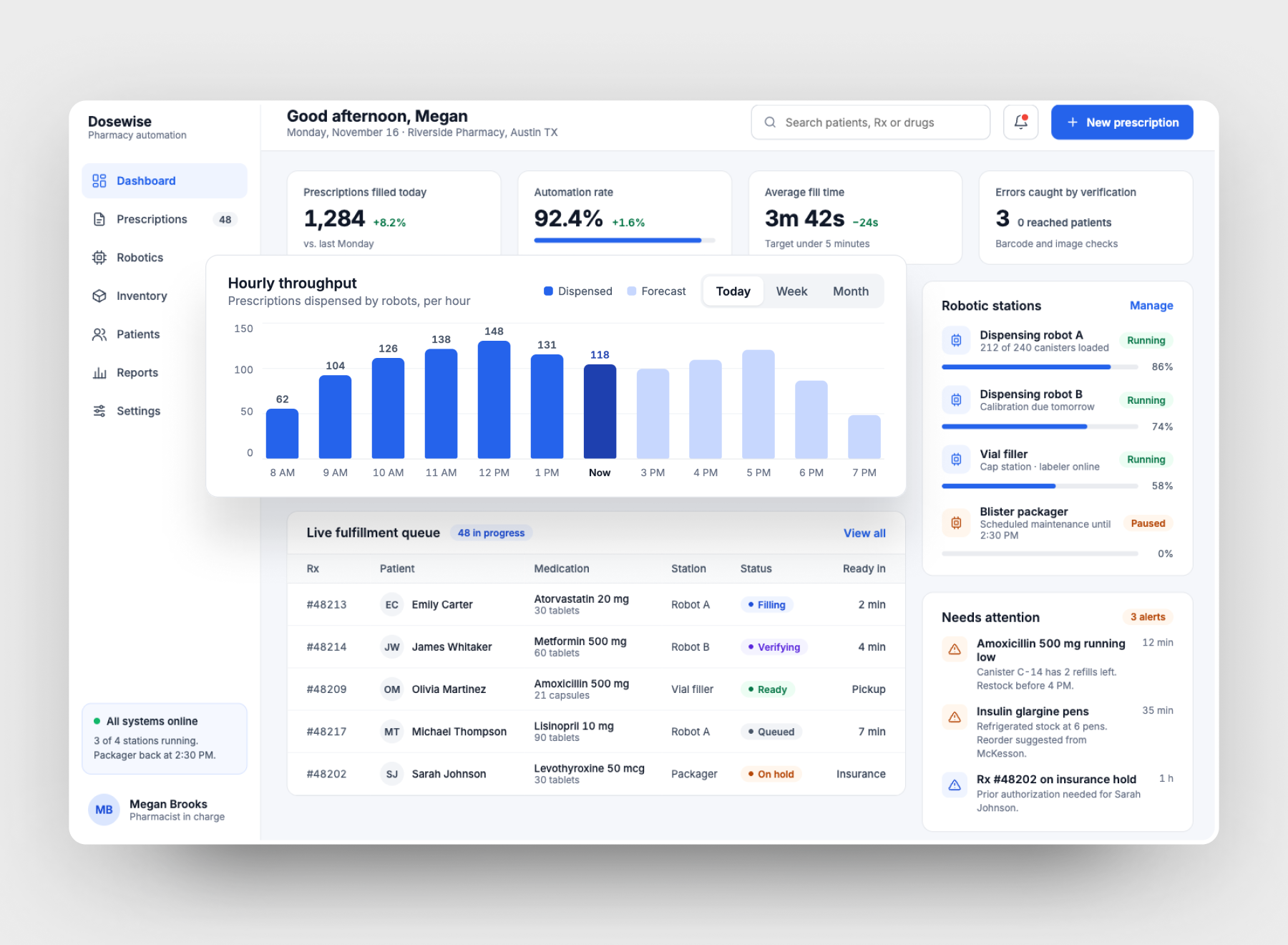
Pharmacy automation solutions help pharmaceutical and healthcare organizations execute specific workflows partially or fully. Below are the seven processes most suitable for automation.
Medication storage & dispensing
Storing and dispensing medications are among the most critical operations in a pharmacy. As each drug is handled multiple times before it reaches the patient, the risk of dispensing errors and mismanagement grows considerably. For instance, medications may be stored in improper conditions, kept past their expiration date, or dispensed in the wrong quantities.
Pharmacy automation solutions play a key role in mitigating these risks. For example, automated storage and retrieval systems (AS/RS) and robotic pack retrieval with real-time inventory tracking monitor each pharmaceutical asset, ensuring proper stock levels and accurate dispensing. When combined with automation hardware for pill counting and high-speed vial filling, pharmacy software significantly reduces manual tasks, letting pharmacy staff focus on higher-value, patient-facing activities.
Prescription compounding
While most pharmacies distribute medications they receive in bulk from manufacturers, some patients require customized treatments for their conditions. In these cases, licensed pharmacies perform prescription-based compounding, modifying medication ingredients or combining several drugs into customized drug formulations according to a doctor’s prescription.
Compounding is highly regulated because of potential risks to patients, so it requires precise ingredient measurement, sterile handling, and strict adherence to safety protocols. Pharmacy automation software supports this process by managing compounding workflows, tracking inventory, and integrating with equipment for robotic mixing and packaging in a controlled environment.
Drug packaging & labeling
Depending on the type of drug and its intended use, medications can be sealed into blister packs, boxes, sachets, vials, bottles, and other drug packaging formats. Packaging and labeling automation software manages the entire workflow, ensuring that each item is handled accurately and in compliance with industry regulations and safety standards.
Patient-specific labeling typically contains critical details such as the patient’s name, medication name, dosage, administration instructions, and special handling requirements. This way, automated software solutions help pharmacies reduce the risk of medication errors, maintain sterility, and uphold regulatory compliance.
Data handling
Patient data management includes repetitive actions, such as data input, storage, updates, and transfer, that a dedicated software solution can automate. Every time a doctor issues an electronic prescription, the data is sent to the pharmacy, where electronic prescription inventory checks verify medication availability. This helps patients find out where they can obtain a particular drug.
Medical ecommerce integration with pharmacy management software allows sales and patient information to enter the system automatically. As a result, online order records stay accurate without manual effort from pharmacy technicians. Additionally, inventory and supply management software continuously monitors stock levels for each drug, sends low-stock alerts to personnel, and places automatic replenishment orders when supplies run low.
Prescription Verification & Safety
Prescription verification is the final safety check before a medication reaches the patient, so even minor mistakes at this stage, such as look-alike packages or similar drug names, can lead to serious consequences. Pharmacy automation software handles critical quality control tasks here, ensuring accurate dispensing: it verifies that the correct medication is being released by comparing each filled order with the original prescription.
Computer vision analyzes package images, while barcode scanning confirms the drug name, strength, and quantity. This way, real-time prescription matching helps pharmacies reduce the risk of medication errors and maintain patient safety.
Inventory Forecasting
Medication ordering involves repeated decisions about what to buy, in what quantities, and when, which can be automated with a dedicated software solution. As demand changes with seasons, local outbreaks, and prescribing trends, manual planning often results in shortages of essential drugs or overstocked items that later expire.
Machine learning models analyze historical sales and prescription data for demand forecasting, while stock-level monitoring compares actual inventory with predicted needs. This enables pharmacies to keep the right medications available and avoid unnecessary purchasing costs.
Reporting & analytics
To continuously improve service quality and maintain a positive working environment, pharmacies need clear visibility into their operations. By integrating pharmacy automation software with healthcare BI tools, they can turn routine operational data into actionable insights.
Such integration enables real-time monitoring of prescription volumes, inventory turnover, staffing performance, and patient satisfaction. This data-driven oversight helps pharmacies identify bottlenecks, ensure regulatory compliance, and improve both operational efficiency and patient care as they grow.
Core Benefits You Gain with Us
Time Savings
Automated pill counting and blister pack filling can save pharmacists considerable time compared to traditional manual methods. With fewer manual tasks, pharmacy staff can redirect their efforts toward clinical work and get more time for patient consultations, medication reviews, or vaccination services.
Accuracy & Compliance
Automated prescription verification and closed-loop medication administration help pharmacies make sure each patient receives the right drug in the right dose. Automated dispensing records reduce the risk of drug misplacement or abuse while ensuring DSCSA traceability and compliance with HIPAA safeguards.
Scalability
Pharmacy automation solutions allow pharmacies to handle higher prescription volumes without proportionally increasing staff, resulting in lower overhead per prescription. Automated replenishment keeps stock levels aligned with demand, leading to fewer stockouts and uninterrupted service.
Safer Compounding
Inaccurate measurement or contamination during compounding poses serious risks for pharmacies and their patients, requiring constant vigilance from pharmacists. Automated compounding solutions help ensure precise ingredient measurement, consistent formulations, and sterile handling regardless of production volume, supporting contamination prevention at every stage.
Less Inventory Waste
Pharmacy management software helps minimize medication waste through expiry date tracking, continuous stock monitoring, and packaging damage alerts for fragile medicine packaging, which means fewer discarded medications and more cost-effective pharmacy operations.
Patient Data Protection
Pharmacy management software ensures secure patient data processing in line with industry standards and regulations. Electronic prescription records and automated recordkeeping help pharmacies maintain privacy during prescription fulfillment and reduce the risk of unauthorized access to patient information.
Technologies Powering Pharmacy Automation
Artificial intelligence (AI)
In pharmacy automation devices, AI performs quality control through medication image analysis. The dispensing machine photographs and weighs each drug, and the software compares both results with the database record (photographic and weight verification). In patient-facing apps, AI-powered chatbots suggest over-the-counter medicines based on symptoms and accept online prescription ordering. Pharmacies also apply consumer data analytics to plan assortment and promotions.
Robotic process automation (RPA)
RPA bots take over rule-based tasks such as barcode-based dispensing and storage, automatic ordering from suppliers, and returns tracking. They also update records for patient data management and prepare regulatory reporting for submission.
Key Integrations
Many pharmacies operate inside hospitals, long-term care facilities, or central fill stations. To work as one unit with these organizations, health system pharmacy software requires healthcare IT ecosystem integration with the systems below.
EHR/EMR Systems
Pulling patient medical history into prescription fulfillment and prescription refills to prevent wrong-drug dispensing, enable substance usage tracking, and speed up order processing.
Hospital Operations Software
Managing equipment and substance ordering, timely maintenance, and proper storage, while adjusting medication distribution across departments to real-time hospital needs.
Healthcare eCommerce Platforms
Selling pharmaceutical products and online services via ecommerce tools that support 24/7 sales and sync each order with pharmacy inventory.
Patient Engagement Platforms
Supporting customer communication through refill reminders, pickup notifications, and pharmacist chat to understand patient needs, improve patient experience, and build patient trust and customer loyalty.
Contributor
-
Healthcare IT Expert & Consultant